
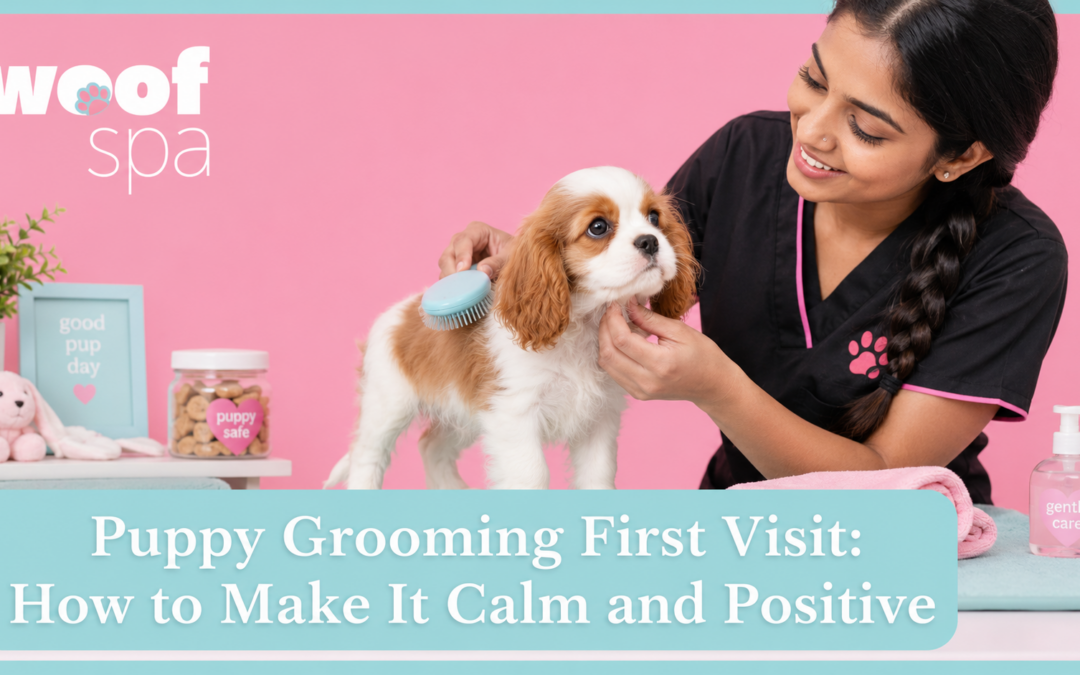
A puppy’s first grooming visit is about much more than a bath or tidy trim. It is an introduction to being handled, brushed, washed, dried and gently guided by someone new. When that first experience is calm and positive, it can shape how your puppy feels about grooming for years to come.
Many Paarl and Franschhoek families bring a new puppy home with plenty of excitement, but grooming is sometimes left until the coat is tangled or the nails are already too long. Starting gently and early helps your puppy learn that grooming is a normal part of life. The aim is not perfection. The aim is trust.
Why early grooming experiences matter
Puppies are learning all the time. New sounds, smells, surfaces and handling experiences become part of their understanding of the world. If grooming is introduced slowly and kindly, your puppy is more likely to accept it with confidence.
A rushed first groom can feel overwhelming. Clippers, dryers, water, brushes and nail tools are all new sensations. Even a confident puppy may wriggle or become unsure. A good first visit should focus on comfort, patience and gentle exposure rather than trying to complete a complicated style.
This is especially important for breeds that will need regular grooming throughout life. Poodle crosses, terriers, spaniels and long-coated breeds benefit from learning early that brushing and trimming are ordinary routines.
Start with handling at home
Before your puppy’s first professional groom, practise gentle handling at home. Touch their paws, ears, tail and chest for short moments while speaking calmly. Reward relaxed behaviour with praise or a small treat. Keep sessions brief so your puppy does not become frustrated.
You can also introduce a soft brush. Let your puppy sniff it first, then brush lightly for a few seconds. Stop before they become restless. Short, happy practice sessions are better than long sessions that turn into a struggle.
Handling practice helps your puppy understand that being touched does not need to be scary. It also helps the groomer because your puppy arrives with some basic confidence.
Keep the first visit simple
A puppy grooming first visit should usually be short and gentle. Depending on age, coat and confidence, it may include a bath, light brush, face tidy, paw tidy, nail check or hygiene trim. The groomer may choose to introduce tools gradually rather than doing everything at once.
This approach is not a shortcut. It is thoughtful training. A puppy that leaves feeling safe is more likely to return calmly next time. Over time, grooming can become more complete as the puppy matures and gains confidence.
Owners sometimes worry if the first groom does not produce a perfect finished look. That is normal. With puppies, the emotional experience matters as much as the result.
Treats, praise and patience help
Positive reinforcement can make a big difference. Treats, praise and gentle encouragement help your puppy connect grooming with good things. The reward should come when your puppy is calm, still or brave during a new moment.
Patience is important because puppies do not understand what is being asked at first. They may chew the brush, wiggle during drying or pull a paw away during nail handling. These behaviours do not mean your puppy is naughty. They mean the experience is new.
A calm groomer will work with your puppy’s limits while still helping them learn. Over time, the puppy builds tolerance and trust.
Dryers, water and new sounds
One of the biggest surprises for puppies is sound. A dryer can feel strange, even if it is not too loud. Water, spray nozzles and grooming tables can also be unfamiliar. Introducing these things carefully helps prevent fear.
At home, you can help by letting your puppy hear everyday sounds without making a fuss. You can also towel dry them gently after damp garden play so they get used to being rubbed and handled. Avoid forcing them through experiences when they are frightened. Calm repetition works better.
During a mobile grooming appointment, the familiar home setting can reduce the number of new things your puppy has to process at once. This is one reason many families prefer at-home grooming for young dogs.
Brushing practice between appointments
Brushing at home is one of the best ways to support professional grooming. It prevents knots, teaches your puppy to accept handling and keeps the coat more comfortable. Focus on common tangle areas, such as behind the ears, under the collar, around the legs and under the chest.
Use a brush suited to your puppy’s coat. Be gentle, especially near sensitive areas. If you find a knot, do not pull hard. Ask a groomer for advice before it becomes a painful mat.
Regular brushing also helps you notice skin changes, ticks, scratches or tender spots early. It is a simple habit that supports your puppy’s wellbeing.
Choosing the right grooming support
A puppy needs a groomer who understands calm handling. Look for someone who takes time, explains the process and listens to your concerns. It also helps if the appointment does not involve a stressful car trip or long wait in a busy environment.
WoofSpa offers mobile grooming for local families in Paarl, Franschhoek and nearby Western Cape areas. A home-based appointment can be a softer introduction because your puppy remains close to familiar surroundings. You can share your puppy’s personality, fears and routine during handover, which helps shape the session.
If you are still learning about the service, you can read more about our grooming team and approach. When you feel ready, online grooming bookings make it easy to arrange your puppy’s visit.
What owners should tell the groomer
Be honest about your puppy’s behaviour and history. Mention if they dislike paw handling, have sensitive skin, are not fully comfortable with brushing or have had a previous fright. Also share any vet advice, vaccination status concerns or coat issues.
The groomer is there to help, not judge. Clear information makes the visit safer and more positive. It also helps set realistic expectations for what can be achieved in one session.
FAQ
When should a puppy have a first groom?
Many puppies can start with gentle grooming introductions once they are old enough and safe to do so according to veterinary guidance. Ask your vet if you are unsure.
What if my puppy is nervous?
That is common. A calm, short first session can help your puppy build confidence without pressure.
Should I brush my puppy before the first visit?
Yes, gentle brushing practice at home helps. Keep it short, positive and suited to your puppy’s coat.
Will my puppy get a full haircut on the first visit?
Not always. The first visit may focus on introduction, comfort and small grooming tasks rather than a full style.
Give your puppy a kind start
Your puppy’s first grooming experience should feel safe, gentle and encouraging. With patience, home practice and the right groomer, grooming can become a normal part of your dog’s care routine. To arrange a calm puppy grooming first visit, book a grooming session with WoofSpa.