
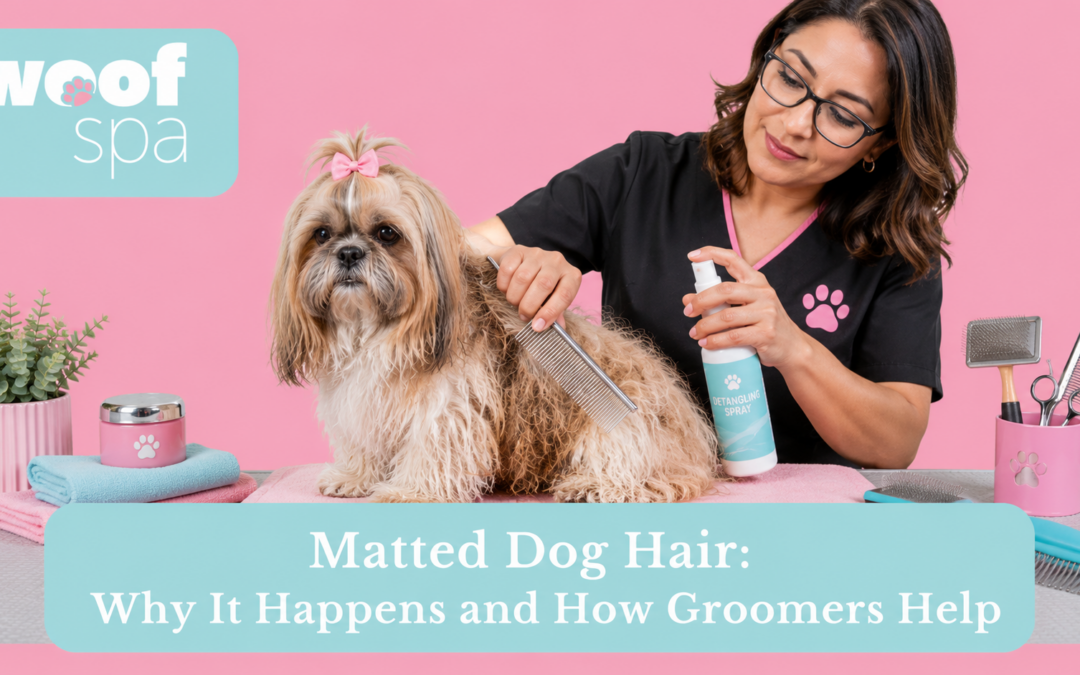
Matted dog hair is one of the most common coat problems groomers see, especially in long, curly, woolly and double-coated dogs. At first, a mat may look like a small knot. Over time it can tighten close to the skin, trapping dirt, moisture and loose hair. Once that happens, brushing at home can become difficult and uncomfortable for your dog.
Many owners feel embarrassed when they notice matting, but it can happen quickly. A few wet walks, missed brushing sessions or a coat that is changing between puppy and adult texture can be enough. The important thing is to deal with mats kindly and safely.
What causes matted dog hair?
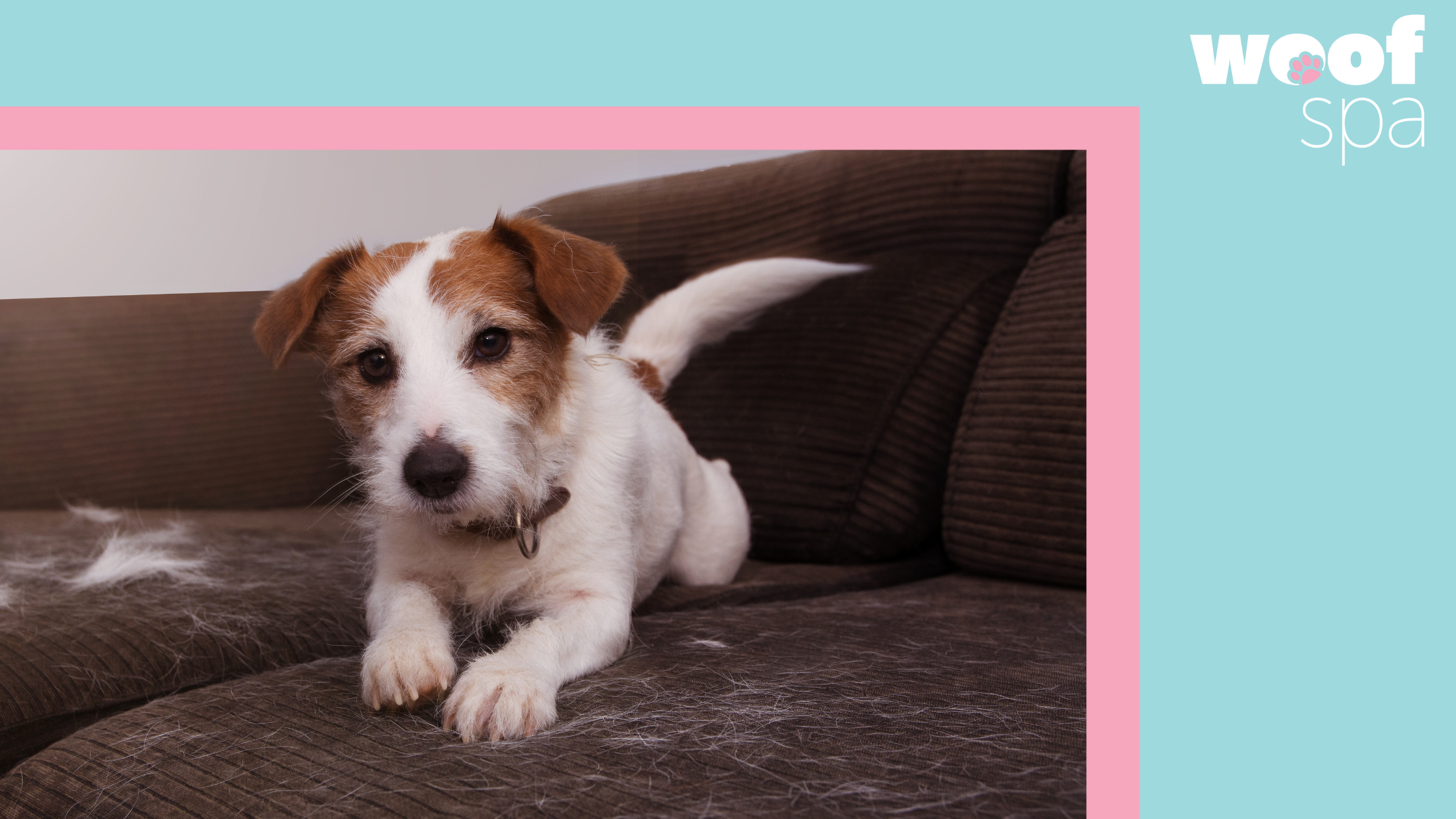
Matting happens when loose hair, dirt and tangles bind together. Friction makes it worse, which is why mats often form behind the ears, under collars, under the front legs, around the tail, on the belly and between the back legs. These are areas where the coat rubs as the dog moves.
Moisture also plays a big role. A damp coat that is not dried or brushed properly can tangle faster. Winter rain, wet grass, swimming and bathing without thorough drying can all contribute. Curly-coated dogs are especially prone because shed hair can stay trapped in the coat instead of falling out.
Puppies can also mat when their coat changes. The soft puppy coat mixes with the developing adult coat, creating tangles that need regular brushing.
Why mats are uncomfortable
Mats are not only a cosmetic issue. Tight mats pull on the skin every time your dog moves. They can make it uncomfortable to walk, lie down or be touched. Severe matting can hide redness, sores, ticks, grass seeds or skin infections.
Mats can also trap moisture against the skin. This may cause odour, irritation and itching. In some cases, the skin under a mat is more sensitive than expected because it has been pulled for a long time.
That is why groomers take matting seriously. The goal is not to blame the owner. The goal is to relieve discomfort in the safest and most humane way.
Why brushing out mats is not always kind
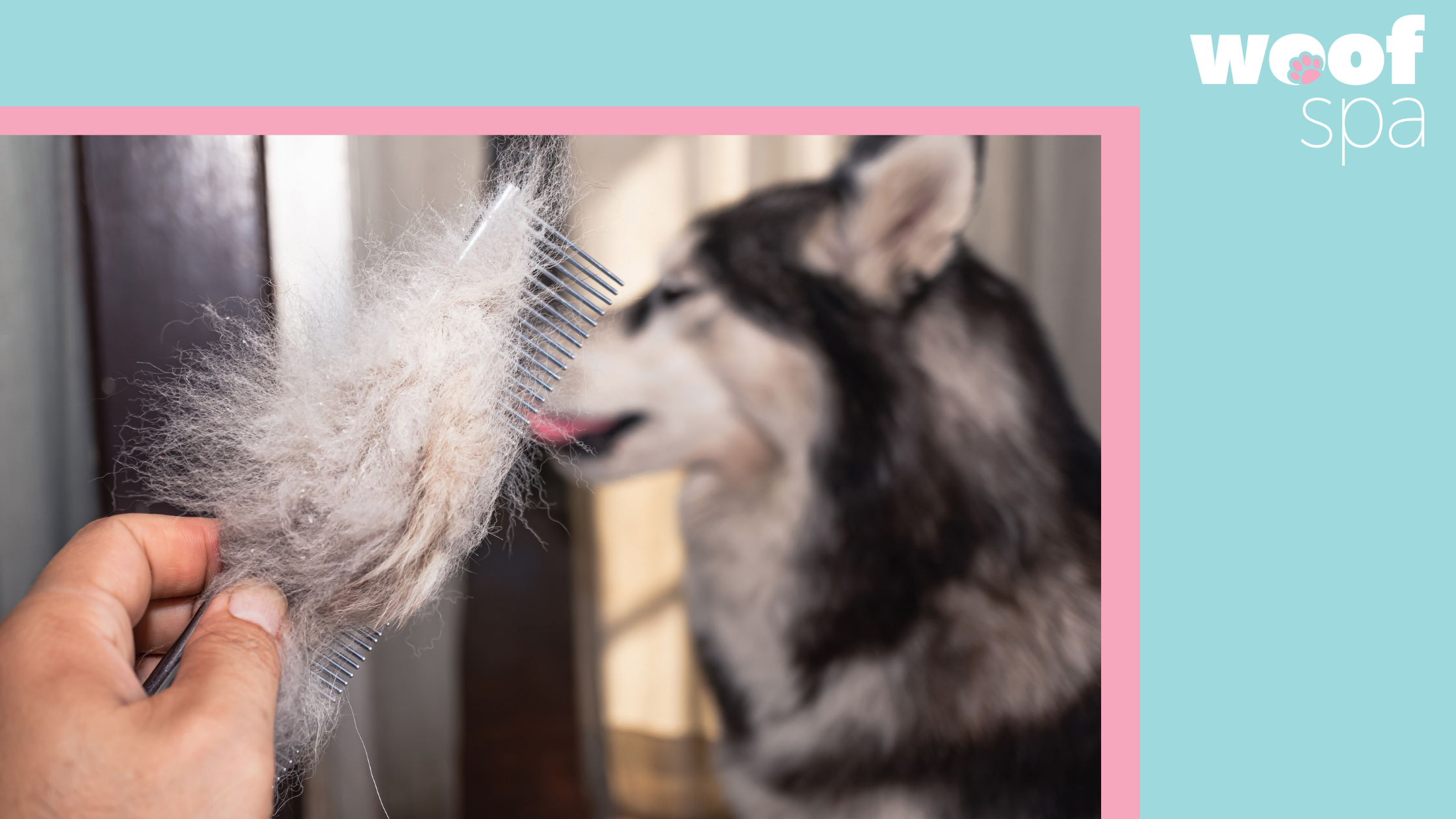
Many people assume a groomer can simply brush all mats out. Sometimes small, loose tangles can be worked through gently. But tight mats close to the skin are different. Brushing them out can be painful and may damage the skin or coat.
A humane groomer will consider the dog’s comfort first. If removing a mat by brushing would cause pain, trimming or clipping may be the kinder option. This can be disappointing if you hoped to keep a longer coat, but comfort must come before appearance.
It is also risky to cut mats out at home with scissors. Mats can sit very close to the skin, and it is easy to accidentally cut your dog. Professional tools and careful handling are safer.

How groomers assess a matted coat
A groomer will usually feel through the coat and check where mats are located, how tight they are and how close they sit to the skin. They will also consider your dog’s behaviour, age, skin condition and tolerance for handling.
If matting is minor, the groomer may be able to loosen it with brushing, detangling support and careful technique. If matting is widespread or tight, clipping the coat shorter may be recommended. In severe cases, the groomer may advise veterinary input, especially if the skin looks sore or the dog is in pain.
Clear communication matters. You should understand what is possible, what is kind and what result to expect before the groom begins.
What happens after mats are removed?
After mats are removed, your dog may look shorter than expected. This is often necessary because the clipper blade needs to pass safely under the mat. The skin may also feel sensitive once the pulling is gone. Some dogs scratch or rub because the sensation is different.
Your groomer may advise gentle care after the appointment, such as avoiding rough brushing over sensitive areas for a short period and watching for redness. If the skin looks inflamed, painful or broken, contact your vet.
The good news is that many dogs feel immediate relief after a matted coat is safely removed. They can move more comfortably, and owners can start fresh with a manageable routine.
Preventing mats between appointments
Prevention is easier and kinder than dealing with tight mats later. Brush your dog regularly using tools suited to their coat. Pay special attention to hidden friction areas, not only the top of the back where brushing is easiest.
After wet walks or baths, dry the coat properly. For curly or thick coats, towel drying alone may not always be enough. Keep collars and harnesses from rubbing constantly in the same place, and check under them often.
Regular grooming appointments are also important. Some coats need professional care every few weeks to stay manageable. If you are unsure how often your dog should be groomed, ask your groomer for a realistic schedule and check dog grooming prices to plan ahead.
How WoofSpa helps with matted dog hair grooming
WoofSpa provides mobile grooming for Paarl, Franschhoek and surrounding areas, with a focus on practical, gentle coat care. At-home grooming can be helpful for dogs with mats because they avoid the added stress of travelling before a sensitive session.
A groomer can assess the coat, explain what is safe, and help you choose the kindest option. Sometimes that means careful brushing. Sometimes it means trimming the coat shorter so your dog can be comfortable again. Either way, the priority is your dog’s wellbeing.
You can also use frequently asked grooming questions if you want more general guidance before booking. For personalised support, book a grooming session with WoofSpa.
What owners should not do
Do not pull hard at mats with a brush. Do not bathe a heavily matted dog before speaking to a groomer, as water can tighten mats. Do not use scissors close to the skin. Most importantly, do not wait too long if your dog seems uncomfortable.
Early help usually means more options. A small knot may be easy to manage, while a tight mat may require clipping.
FAQ
Can matted dog hair hurt my dog?
Yes. Mats can pull on the skin, trap moisture and hide irritation or sores.
Can all mats be brushed out?
No. Small tangles may be brushed out, but tight mats often need trimming or clipping for comfort and safety.
Will my dog need to be shaved?
Not always. It depends on how severe the matting is. A groomer will recommend the safest option.
How can I stop mats coming back?
Brush regularly, dry the coat properly and keep up with grooming appointments suited to your dog’s coat type.
Choose comfort first
Matted dog hair grooming should always put comfort before appearance. With gentle professional help and a manageable home routine, your dog can feel better and stay healthier. To get support with a tangled or matted coat, book a grooming session with WoofSpa.