
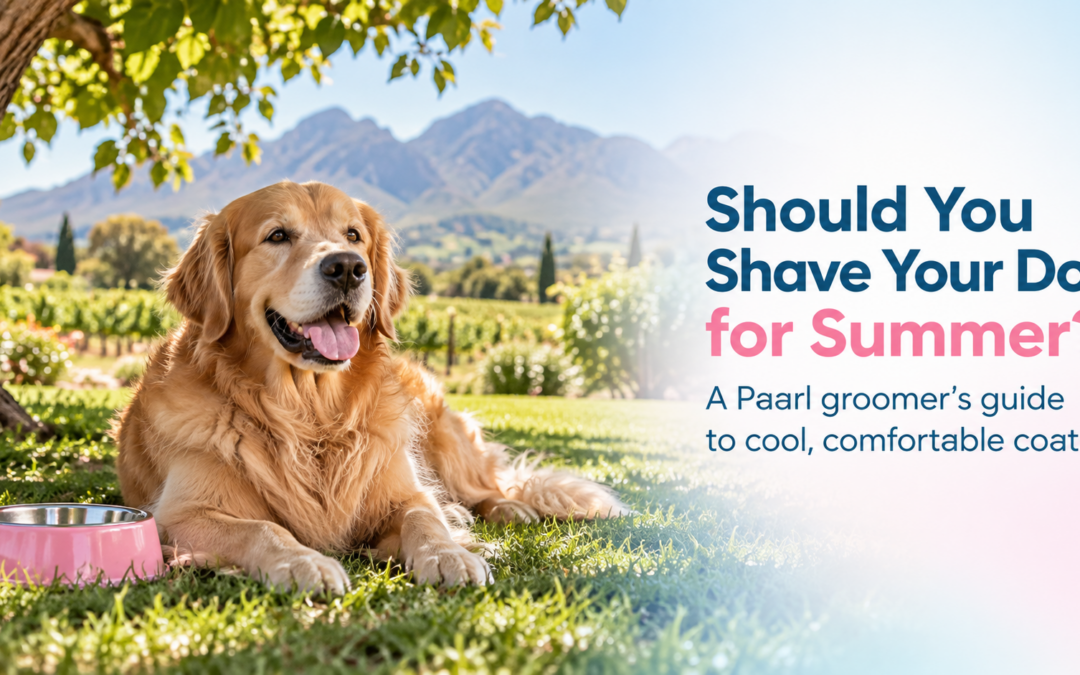
As the Winelands warms up, one request starts showing up in our bookings every year: “Please just shave him off for summer.” It makes sense. On a 35°C afternoon in Paarl, a thick-coated dog panting on the stoep looks miserable, and taking all that fur off seems like the kind thing to do.
For many dogs, though, a full shave-down does the opposite of what owners hope. Before you book a summer cut, it helps to know what kind of coat your dog has and what keeps them cool.
Does shaving a dog keep them cooler?
For double-coated dogs, usually not. A double coat has two layers: a soft, dense undercoat and longer guard hairs on top. Together they insulate your dog against heat as well as cold. For most dogs shaving isn’t recommended, and for double-coated breeds it can do more harm than good.
Dogs don’t cool down mainly through their skin the way we do. They pant, and they release heat through their paw pads and nose. A well-kept coat shades the skin from direct sun and traps a layer of cooler air. Shave it off and you remove that protection. Shaving can make overheating worse for double-coated breeds, and sunburn on backs, ears and noses becomes a risk.
Which dogs have a double coat?
If your dog sheds heavily in spring and autumn and has a soft, woolly layer under the top coat, they’re likely double-coated. Common examples in Paarl and Franschhoek homes include:
- Golden Retrievers and Labradors
- German Shepherds and Belgian Malinois
- Huskies and Malamutes
- Border Collies and Australian Shepherds
- Pomeranians, Chow Chows and Corgis
- Many Boerboel and Ridgeback crosses with denser coats
Single-coated breeds are different. Poodles, Maltese, Shih Tzus, Bichons, Yorkies and many doodles have hair that keeps growing. They usually do well with a shorter, practical summer trim. Mixed breeds can go either way, so if you’re not sure, ask your groomer to check the coat before deciding on a cut.
What can go wrong when you shave a double coat?
The coat may not grow back the same, and the skin underneath is left exposed. The risks include:
- Patchy or poor regrowth. Post-clipping alopecia, sometimes called “coat funk,” is a lesser-known long-term risk of shaving double-coated dogs. The undercoat can grow back faster than the guard hairs, leaving a fuzzy, uneven coat that mats more easily and doesn’t protect as well.
- Sunburn. The pale skin under a thick coat isn’t used to direct Western Cape sun.
- Worse heat regulation. Without its insulating layer, your dog’s body absorbs heat more directly.
- More skin irritation. Grass seeds, insect bites and scratches reach the skin more easily without the coat in the way.
There are exceptions. A severely matted coat sometimes has to come off for the dog’s welfare, and vets sometimes ask for areas to be clipped for medical reasons. In those cases shaving is the kindest option, and the coat can be managed carefully as it grows back. Our guide to what to expect from professional mobile dog grooming explains how we assess the coat before deciding on a cut.

What actually keeps a double-coated dog cool in summer?
Getting rid of the dead undercoat, not the whole coat. After winter, many dogs carry loose, compacted undercoat that traps heat and blocks airflow to the skin. A professional deshed lifts out that dead fur and leaves the protective coat in place.
A good summer coat routine looks like this:
- Book a deshedding groom as the weather turns, so your dog starts summer with a light, breathable coat.
- Brush at home two or three times a week with an undercoat rake or slicker brush, working down to the skin.
- Do a light tidy where it helps. Trimming paw pads, the sanitary area and feathering on the belly keeps dogs cleaner and cooler without changing the coat structure.
- Keep up regular grooms every six to eight weeks through summer, especially for heavy shedders.
How should single-coated breeds be groomed for summer?
A shorter, even trim is usually fine and very practical. Poodles, doodles, Maltese and similar breeds benefit from a “summer cut” that’s easier to keep tangle-free after swims, walks and garden play. The aim is a length you can brush properly, because short and well kept beats long and matted every time. Leave enough length on the back to protect against sun, and avoid clipping down to bare skin.
How can you protect your dog from heat in the Winelands?
Grooming is only part of it. Timing, shade and water matter just as much.
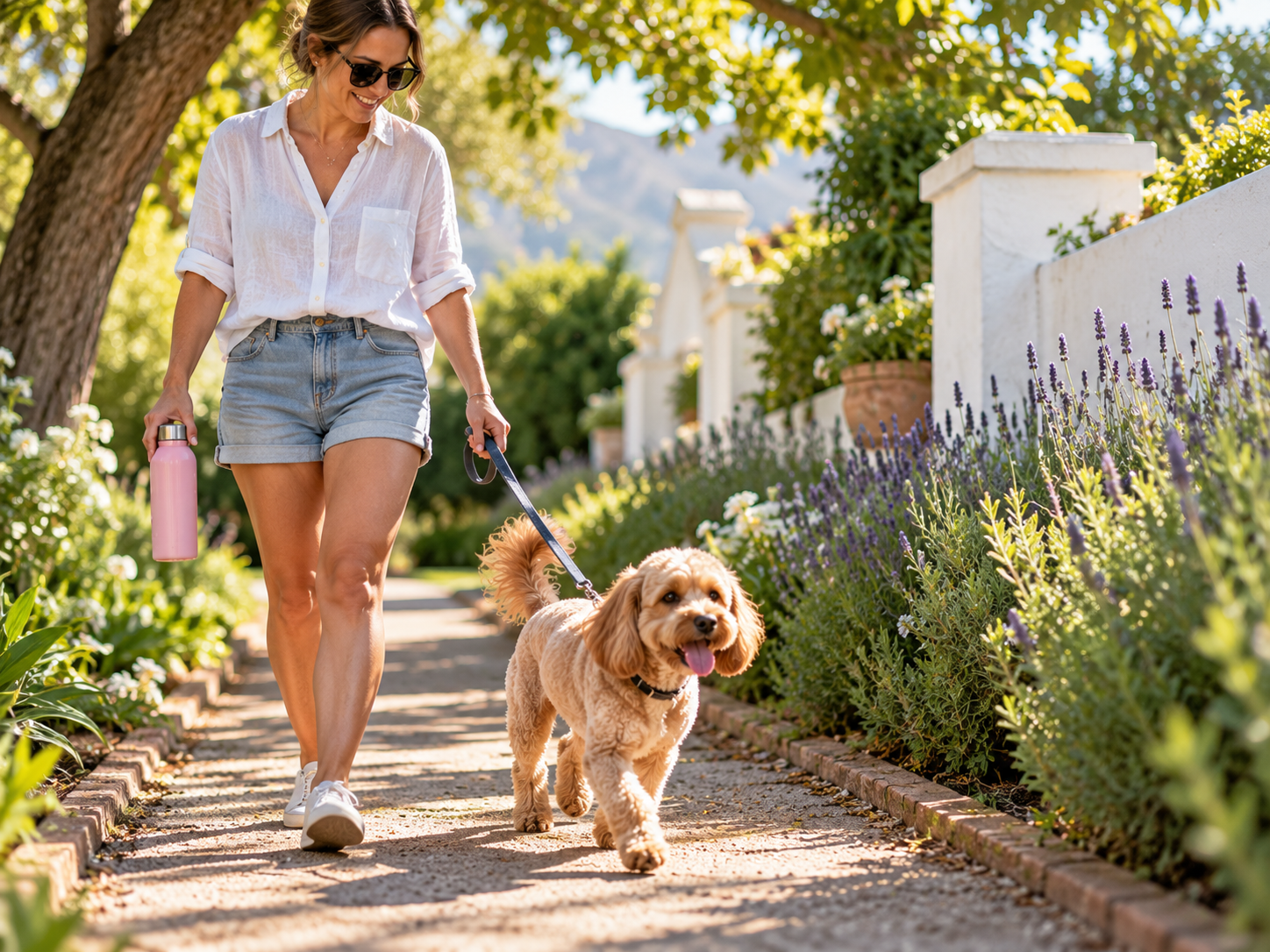
- Walk early or late. Keep dogs resting indoors during peak heat, roughly 10am to 4pm, and offer cool water after walks.
- Test the pavement. If the pavement is too hot for your hand, it’s too hot for your dog’s paws.
- Provide shade and airflow. A shaded spot, a cooling mat or a damp towel helps on very hot days.
- Never leave your dog in a car, even for a quick stop.
- Know the warning signs of heatstroke: heavy panting, drooling, a bright red tongue, wobbliness or vomiting. Move your dog somewhere cool, offer water, and call your vet straight away.
Older dogs and flat-faced breeds struggle with heat more than most. If you have a senior dog, our post on grooming senior dogs covers gentle care for older pets.
Why do summer grooms matter for fleas and ticks?
Warm weather brings parasites, and a groom is a good time to catch them early. Fleas and ticks hide easily in thick coats. Ticks often hide in and behind the ears, as well as between the toes, under the collar and in the armpits.
During a groom we go over your dog’s coat and skin carefully. WoofSpa also offers flea baths if your dog needs one. A flea bath deals with what’s there on the day, but it doesn’t prevent new fleas or ticks, so speak to your vet about ongoing prevention through summer.
Why book summer grooming at home?
Mobile grooming means less stress and less heat for your dog. There’s no hot car ride and no waiting room, and your dog stays somewhere familiar. That’s why many owners across Paarl, Franschhoek and the surrounding estates choose our mobile dog grooming for busy owners. If you live in one of the estates, read more about mobile grooming in Val de Vie.
Frequently asked questions
Should I shave my Golden Retriever for summer?
No, unless your vet recommends it or the coat is badly matted. A deshedding groom removes loose undercoat and keeps your Golden cooler than a shave would.
Will my dog’s coat grow back after shaving?
Often it does, but double coats can grow back patchy, coarse or uneven. Some dogs take many months to recover, and a few never fully regain their original coat.
What’s the best summer cut for a Poodle or doodle?
A short, even trim you can brush to the skin, leaving some length on the back for sun protection. Tell your groomer how much brushing you can realistically manage at home.
How often should my dog be groomed in summer?
Every six to eight weeks suits most dogs. Heavy shedders and dogs that swim often may need more frequent visits.
Can grooming help with my dog’s summer itching?
A bath and a deshed remove loose fur, dust and pollen, which often helps. Constant scratching, red patches or hair loss need a vet check.
Do you groom in Franschhoek as well as Paarl?
Yes. WoofSpa offers mobile grooming in Paarl, Franschhoek and the surrounding Winelands, plus in-shop grooming in Paarl.
Get your dog summer-ready with WoofSpa
Your dog’s coat already does a good job in summer. It just needs the dead winter undercoat cleared out. Whether you have a double-coated shedder that needs a proper deshed or a curly-coated pup ready for a neat summer trim, the WoofSpa team will advise on what suits your dog’s coat. Check our grooming prices and book a grooming session before the December rush.